
Sudden cardiac arrest (SCA) is a life-threatening condition that causes a person’s heartbeat to stop abruptly and unexpectedly. SCA is usually caused by an abnormality in the heart's electrical system. When this happens, blood flow to the brain, the heart, and the rest of the body stops and, if standing, the person usually collapses. SCA strikes people of all ages, including children and teenagers who seem to be healthy.
A Life-Threatening Condition
WHAT IS SUDDEN CARDIAC ARREST?
#1 Killer
of student athletes ¹
#1 Killer
on school campuses ²
More than 90%
of SCA victims die ³
Over 23,000
are stricken annually ⁴
1 in 300
youth has an undiagnosed heart condition that puts them at risk ⁵
The Problem
Sudden cardiac arrest is arguably the leading cause of death in all kids.
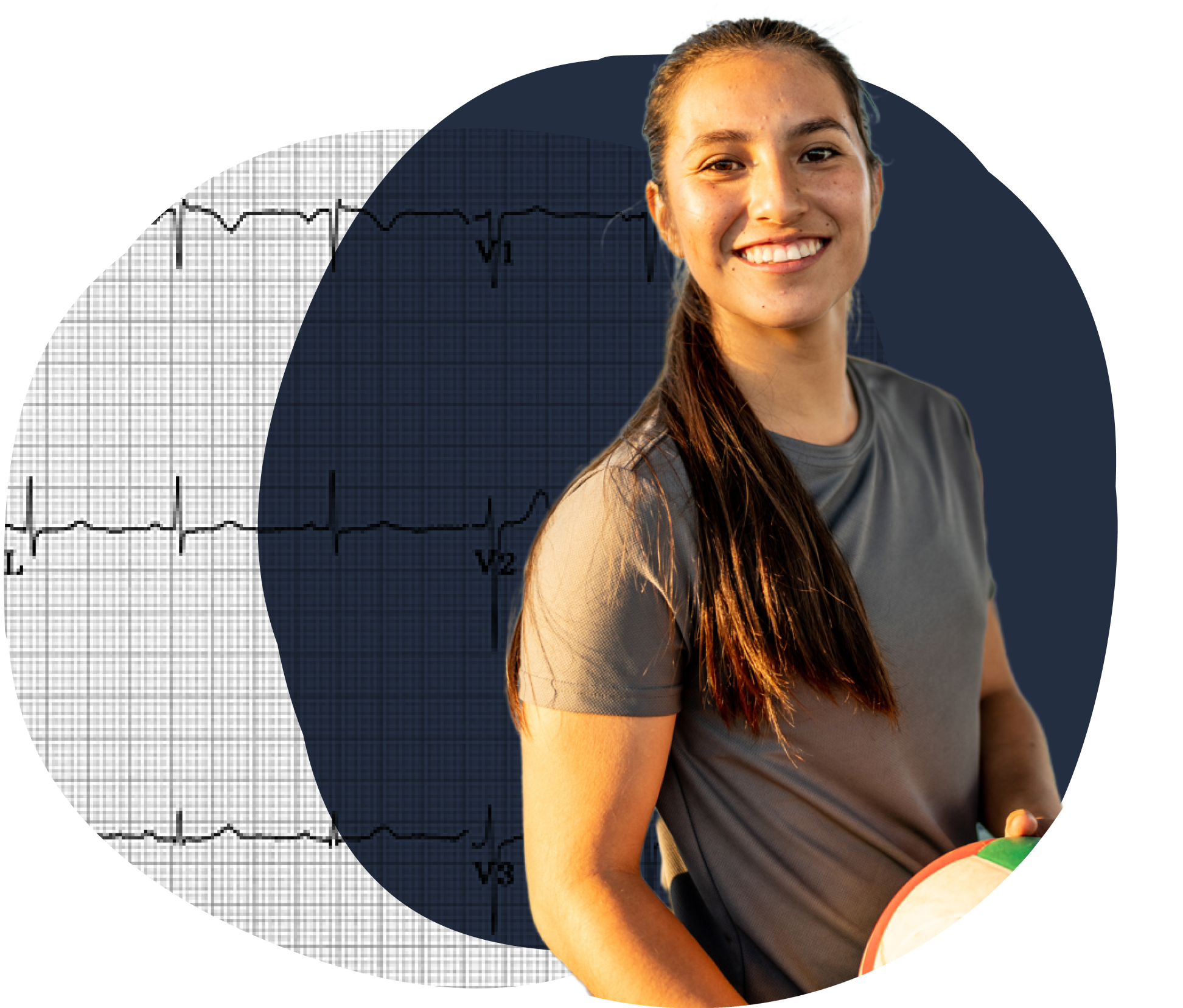
The current solution isn’t working.
10%
Current solution (standard history and physical exams) alone miss up to 90% of youth at risk for SCA.⁶
ECGs significantly improve detection
94%
ECGs significantly improve detection of various conditions (such as ion channelopathies and cardiomyopathies) and raise the sensitivity of pre-participation evaluations for potentially fatal cardiac conditions to 94%.⁷
>40 million kids
are in need
¹Harmon KG, Asif IM, Klossner D, Drezner JA. Incidence, cause, and comparative frequency of sudden cardiac death in NCAA athletes: a decade in review. Circulation. 2015;132(1):10–19. doi:10.1161/CIRCULATIONAHA.115.015431
²Harmon KG, Asif IM, Klossner D, Drezner JA. Incidence, cause, and comparative frequency of sudden cardiac death in NCAA athletes: a decade in review. Circulation. 2015;132(1):10–19. doi:10.1161/CIRCULATIONAHA.115.015431
³The Cardiac Arrest Registry to Enhance Survival (CARES), https://mycares.net/sitepages/aboutcares.jsp
⁴The Cardiac Arrest Registry to Enhance Survival (CARES), https://mycares.net/sitepages/aboutcares.jsp
⁵Derived from multiple sources: Fuller (1997), Corrado (2006), AHA (2007), Wilson (2008), Bessem (2009), Baggish (2010), Harmon (2015), Drezner (2016).
⁶ Harmon KG, Zigman M, Drezner JA. The effectiveness of screening history, physical exam, and ECG to detect potentially lethal cardiac disorders in athletes: a systematic review/meta-analysis. J Electrocardiol. 2015;48(3):329–338. doi:10.1016/j.jelectrocard.2015.02.001
⁷Kim JH, et al. Clinical Considerations for Competitive Sports Participation for Athletes With Cardiovascular Abnormalities: A Scientific Statement from the AHA/ACC. J Am Coll Cardiol. 2025;85(10):1059–1108. doi:10.1016/j.jacc.2024.12.025